
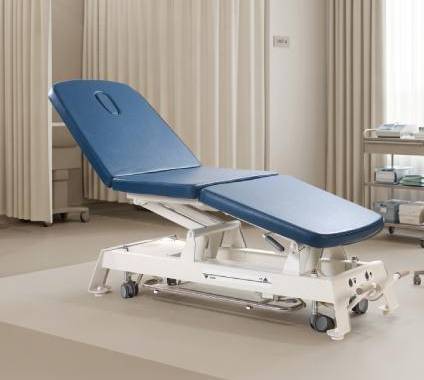
An electric examination table earns its keep well beyond holding a patient in a still position. Powered positioning can help trim setup time, takes much of the lifting off staff, and adapts from physiotherapy to a quick exam without a hitch.
Key Takeaways
- Setup time per patientcan drop once an electric examination table handles the heavy adjusting.
- Powered height and backrest controlhelp reduce the daily lifting for clinical teams.
- One surfacecan accommodate diagnostics, physiotherapy and routine checks. Less kit to store.
- Repeatconsistent positioning, patient after patient, with motorised control.
- Low access heightscan help frail and low-mobility patients climb on with less effort.
Walk into most clinics and the examination table is just a flat top where patients perch and wait to be examined. That drains time, quietly, across every working day. A well-made electric examination table runs a room differently. It sets the pace for how fast staff settle patients and how cleanly one appointment rolls into the next.
Powered controls do the real work here. One press drops the height so a patient gets on without strain, then lifts the bed to suit the clinician standing over it. An electric examination table gives teams precise, repeatable positioning that can be difficult to achieve consistently with a manual model, which helps keep each exam steady and the schedule on track.
The Table Sets the Pace of The Room
Built into The Workflow, Not Beside It
The surface beneath a patient decides how they board, how they settle, and whether the exam runs clean. Move it on command, and the clinician stops fighting the mechanics, with attention freed for the assessment that matters. Poorly designed tables flip that. Staff stoop, handovers stall, and the furniture becomes an obstacle instead of help.
The Hidden Cost of Standing Still
Every minute lost to manual cranking adds up across a full clinic day. Across a busy schedule, those minutes accumulate into valuable clinical time. A surface that adjusts under power helps protect workflow and staff efficiency, and may allow a practice to see more patients without rushing care.
Power Takes the Strain Off Staff
Positioning Without the Heavy Lifting
Backs give out in clinics for a simple reason. Staff bend, push and haul patients into position dozens of times a shift. Motorised height and backrest control help reduce much of that load. The table comes to the patient and the clinician, so positioning happens more quickly rather than through brute force and crossed fingers.
Speed That Patients Actually Feel
Quick, smooth positioning reads as competence to the person on the table. A jerky, manual struggle does the opposite and may affect the patient’s confidence before the exam even begins. Foot switch or handset control keeps the clinician’s hands free and the patient steady. Small detail, real difference in how a clinic is judged.
Where One Surface Earns Its Keep
Different Rooms, Same Demand for Control
Physiotherapy needs a low, stable surface for hands-on work and a height that protects the therapist’s posture. Diagnostics call for precise tilt and quick repositioning between scans. General examination rooms want a fast turnover. A single powered table can support all of these, which may reduce the equipment a clinic has to buy, store and maintain.
Built to Switch Tasks Fast
Programmable settings let a busy room reset to a preferred position with one press. That matters when staff rotate between procedures and cannot waste time dialling in the same setup again. Models equipped with memory positions and preferred access heights keep the right configuration one button away across the working day.
- Physiotherapy sessions stay comfortable for the therapist thanks to a low, steady working height.
- In diagnostics, smooth tilt controlcan assist with patient positioning and efficient workflow.
- Blood collection and minor procedurescan benefit from stable, height-matched access.
- When the surface drops near floor level, elderly and low-mobility patientscan board with less effort.
- Fewer tables to buy and service. Thatmay help keep both budget and maintenance load down.
Spec It Right or Pay for It Later
Match the Motors to The Workload
Daily clinical use is hard on a table. A few things decide how long it lasts. Motor count, for one. Frame strength too, and the grade of upholstery. A busy room often benefits from reinforced steel and a genuine weight rating, not a light frame built for occasional use. Upholstery designed to resist disinfectant and abrasion stays intact through repeated wipe-downs.
Warranty and Service Tell the Real Story
On paper, a lower-priced alternative can look the same as anything else. Over time, differences in build quality, spare parts availability and long-term support may become apparent, making the initial saving potentially lead to higher ownership costs. Buyers who check warranty, parts supply and who actually build the thing dodge that trap. In-house engineering means support that outlasts the sale.
A Smarter Room Starts with The Right Table
The table a clinic picks shapes its workflow for years, not the odd week. A good powered surface helps reduce physical strain on staff and can help improve patient throughput. Anyone fitting out a new clinic or reviving a tired room should compare motorised options first, weighing build quality against the warranty before money changes hands.