For treatment facilities, the treatment table is an integral component, serving as an essential platform for a wide range of clinical, medical, rehabilitation, and therapeutic procedures. It also plays an important role in supporting practitioner comfort and workplace ergonomics.
The type of treatment surface used in a clinical, medical, or therapeutic setting, and its ability to accommodate different patient needs, can influence patient comfort, accessibility, and practitioner efficiency. A Hi Lo treatment table features a height-adjustable design that allows healthcare professionals to select an appropriate working height for different procedures, helping support ergonomic working practices while improving patient access.
Height-adjustable treatment tables can also assist with patient transfers, particularly for individuals with limited mobility, and provide flexibility for a wide variety of clinical techniques and therapeutic procedures. Their ergonomic design helps practitioners maintain more comfortable working postures during daily use.
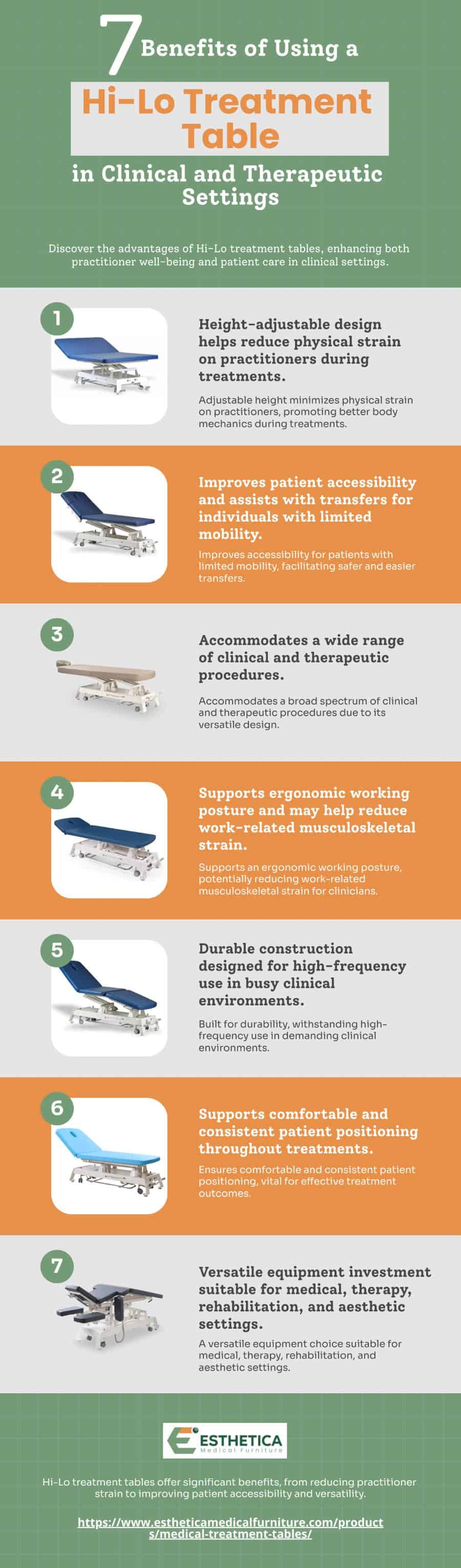
Equipping a clinic or therapy facility with a reliable Hi Lo treatment table can contribute to a more comfortable, accessible, and efficient treatment environment for both practitioners and patients. Below is an infographic outlining seven key benefits of using a Hi Lo treatment table in clinical and therapeutic settings.