
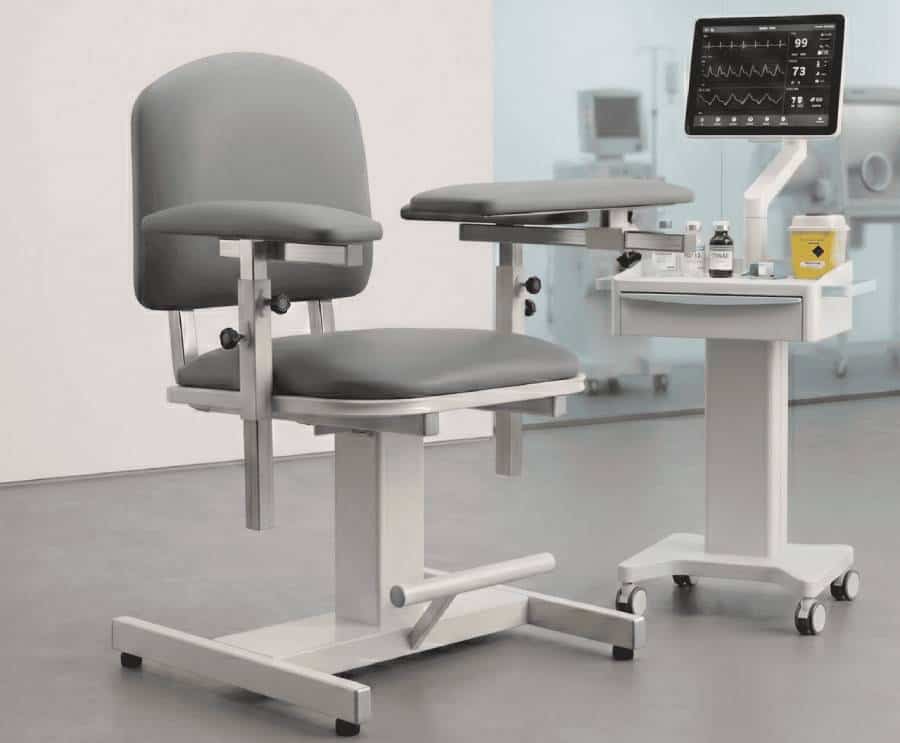
The right phlebotomy chair shapes how patients settle and how phlebotomists work. Build quality, recline range, and wipe-down upholstery decide whether the unit lasts five years or barely makes one.
Key Takeaways
- Calmer patients mean cleaner draws and fewer reschedules at the front desk.
- A phlebotomy chair built for clinical work protects staff posture too.
- Height, tilt, and armrest angles change throughput more than buyers think.
- Wipe-friendly upholstery decides long-term hygiene in a busy sampling bay.
- A welded steel frame outlasts cheap options by years, sometimes a decade.
Patient experience matters more than it used to in hospitals, pathology labs, and outpatient clinics. Sampling rooms handle nervous people all day. The phlebotomy chair a patient sits on plays a quiet role in how that visit goes. Most procurement teams underrate it until complaints start piling up at the front desk.
A purpose-built phlebotomy chair changes the feel of the whole room. The arm sits at the right height for the draw. The patient settles instead of bracing for the needle. Phlebotomists stop hunching to reach a vein. Procurement heads soon spot the difference in throughput, repeat-stick rates, and how the bay looks to walk-ins.
Why Sampling Seats Carry More Weight Than Buyers Expect
- Posture Decides Sampling Accuracy: Vein access gets harder when the arm hangs below heart level or twists at the elbow. A clinical chair with a proper phlebotomy armrest holds the limb flat and steady. Technicians stop bending sideways during the draw. Repeat sticks drop. Patient complaints about bruised arms drop along with them.
- Anxiety Shows Up in the Numbers: Nervous patients fidget. Fidgeting causes missed veins, longer tourniquet time, and the occasional fainter. A chair that reclines smoothly into a near-flat angle catches that fainter without drama. The phlebotomist keeps the needle steady. The bay clears on time, and nobody outside starts checking the wall clock.
Build Features That Separate Clinical Grade From Office Furniture
- Frame and Finish Matter Daily: Welded steel frames with proper powder coating shrug off years of trolley bumps, alcohol wipes, and the odd spill. Cheaper frames flake. They corrode. Then they wobble. Quality manufacturers build their medical recliner range on precision-welded steel because frame failure drives most early replacements in clinical settings.
- Upholstery Tells the Real Story: Vinyl that was never built for clinical disinfection breaks down fast. Tiny cracks form along the seams. Fluid gets in. The chair becomes a source of contamination between patients without anyone really noticing. Disinfectant-resistant upholstery with UV and fire resistance handles repeated bleach, alcohol, and quat wipes for years.
What Throughput-Focused Buyers Actually Compare
- Adjustability That Earns Its Keep: Electronic height controls drop the chair low for elderly patients or wheelchair transfers, then raise it back up so the technician can work without hunching. Manual cranks waste minutes and tire staff out. Foot-switch operation frees both hands during the draw, which counts when the next patient is already at the door.
- Safety Built In, Not Bolted On: A flat or Trendelenburg position matters the day a patient faints mid-draw. Chairs without that range push staff into floor-level improvisation. Reinforced powder-coated frames take repeated weight cycling year on year. Low access height also cuts fall risk during transfer for older or unsteady patients walking in.
- Throughput Math No One Wants to Calculate: A clinic running thirty draws a day saves real minutes when adjustments take seconds rather than turns of a crank. Multiply that by the month. Then the quarter. The chair that looked pricey on the quote earns itself back through staff time alone, before counting reduced retakes and wasted reagents.
Features Worth Confirming Before Procurement Sign-Off
Specifications That Affect Daily Use: Procurement teams that compare on price alone find the gaps later, usually mid-warranty. A short checklist makes the trade-offs visible up front and reduces rework. The points below sit near the top of most clinical evaluation lists when phlebotomy stations are being fitted out from scratch or refreshed after an audit.
- Electronic height adjustment with low access for safer transfers in and out.
- Recline range that reaches flat or Trendelenburg for fainters.
- Padded, swivelling armrests on both sides so left and right draws work equally well.
- Wipe-friendly upholstery with sealed seams built for daily chemical cleaning.
- Reinforced powder-coated steel frame, rated institutional, not domestic.
Seating That Quietly Lifts Every Sampling Visit
A well-built sampling chair stops getting noticed, which is the best thing a piece of clinical furniture can ever do. Patients sink in and forget about it. Staff stop fiddling with the height. The room moves at the pace the floor plan originally promised. That is the quiet win.
Clinics planning a phlebotomy upgrade should book a live demonstration, test upholstery samples against the cleaning protocol they actually use, and ask for service histories from existing institutional installations. The right chair pays itself back through fewer retakes and a calmer waiting room. Reach out to a clinical furniture specialist before the next procurement window closes.