
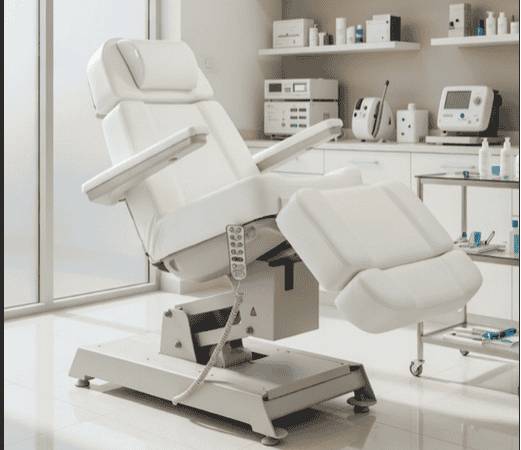
Derma chairs hydraulic run on oil-filled cylinders and foot pedals, which makes them simple but prone to seal leaks, pedal fatigue, and uneven descent over time. Before buying, check the cylinder material, pump type, and weight rating, and test the chair under load. Electronic chairs solve most of these problems but cost more upfront.
Key Takeaways
- Hydraulic chairs use an oil-filled cylinder and foot pedal, so they work without power but wear out at the seals, which causes height loss between pumps and eventual repair costs.
- Pedal fatigue and uneven descent speeds based on patient weight are daily friction points that buyers rarely notice during a short demo.
- Before buying, check the cylinder rod plating, ask whether the pump is single or double action, and confirm the weight rating matches your patient range.
- Electronic chairs like the Mridul and Arca remove the pedal, fluid, and seal-leak problem, though hydraulic still fits low-power or budget-first setups.
A derma chair looks simple from the outside. Sit on it, press the pedal, and the chair rises. Press again and it lowers. Most clinic owners pick one based on price and that pedal feel during a five-minute demo. Two years later, they discover what the demo did not show. This is a quick explanation of what sits inside the chair, what tends to go wrong, and what to ask before signing the invoice. Most buyers focus on looks. A derma chair hydraulic system does the actual lifting all day, and small choices in its build affect your costs later.
How the Mechanism Works
A derma chair hydraulic uses an oil-filled cylinder under the seat. A foot pedal pumps oil into the cylinder. The piston rises and the chair lifts. A release valve, usually a second pedal, drops the chair back down. There are no motors and no programmable electronics. The system is mechanical, and that is its appeal for buyers who want simplicity or operate in spaces with patchy power supply.
The Trade-offs Show Up in Daily Use
Pedal fatigue is the first one. A receptionist or assistant pumps the pedal eight to twelve times to raise a chair from base to working height. Across thirty patients a day, that adds up. The doctor or therapist often ends up pumping the chair themselves between procedures, which is not where their time should go.
The second trade-off is the descent. Hydraulic chairs lower by releasing the valve, and the speed depends on a flow restrictor and the weight on the seat. A heavier patient drops faster. A lighter one descends slowly. Some chairs feel uneven. Patients notice that, perhaps more than clinic owners expect.
Seal Leakage is the Quiet Killer
Every hydraulic chair leaks eventually. The seals around the piston dry out, oil weeps past, and the chair starts losing height between pumps. Early signs are subtle. The chair drops two centimetres in an hour while a procedure runs. The doctor adjusts the lighting. Six months later, the chair will not hold height at all.
Repair is possible. Reseal kits exist. The labour and lost clinic hours usually cost more than the original saving over an electronic model.
What to Inspect Before Buying
Cylinder material comes first. Chrome-plated steel resists corrosion. Plain steel pits and leaks earlier. Ask the supplier what the rod is plated with.
Pump quality is the next call. A double-action pump moves oil on both the up and the down stroke of the pedal. A single-action pump moves oil only one way. Double-action gets to working height in half the pedal cycles.
Weight rating matters too. A chair rated for 180 kg uses a thicker cylinder and stronger seals than one rated for 120 kg. Indian patients today cover a wider weight range than the chairs of a decade ago were designed for.
Where Electronic Chairs Change the Conversation
Esthetica Medical Furniture builds its Mridul Derma Chair and Arca Derma Chair as electronic units. Motorised height, backrest, tilt, and footrest adjustments replace the pedal entirely. The Mridul carries a programmable handset that stores doctor-preferred positions. There is no hydraulic fluid to leak past worn seals. The chair runs without a pedal cycle. The descent stays at one steady speed whatever the patient’s weight.
That said, hydraulic still has a place in low-power settings or budget-tight first chairs.
Next Steps
Ask the supplier to demonstrate the chair under a 100 kg load, not empty. Watch the descent speed. Count the pedal strokes from base to top. Run a finger along the cylinder rod. The chair tells the buyer the truth in three minutes if the right questions get asked.
Featured image source: https://drive.google.com/drive/folders/1a6e2qUk75oGza30O5q4_oA_asjQG8Hqw