
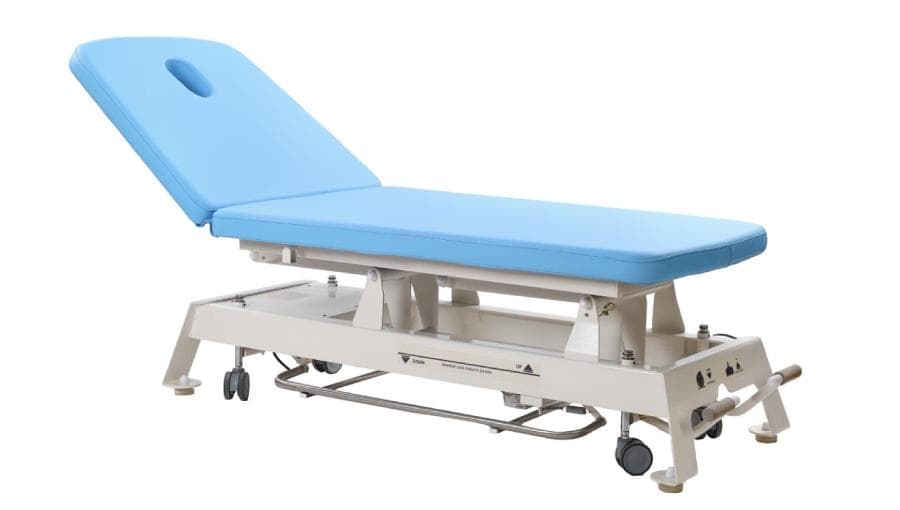
The right examination table price reflects the full range of clinical features a table must support. Clinics that invest in the correct specification of such chairs improve patient positioning, reduce practitioner fatigue, and gain measurable value across thousands of daily treatment sessions.
Key Takeaways:
- Examination table price should reflect the full range of included functional features, not just the base unit cost.
- Tables with gas spring adjustment support better practitioner posture and reduce strain across busy clinic sessions.
- Multi-section designs allow clinicians to position patients accurately for a wide range of clinical procedures.
- Poor table quality leads to frequent repairs, early replacement, and disruptions to patient flow.
- Choosing for functionality from the start lowers the true cost per treatment session over a table’s working life.
Clinic procurement decisions are rarely straightforward, and the examination table price is a case in point. Budget pressure often pushes buyers toward the lowest quoted figure. A table chosen purely on cost rarely holds up under daily clinical demands. What looks like a saving on day one often becomes a recurring expense before the year is out.
The examination table price a clinic pays carries more meaning than what appears on the purchase order. A table that supports precise height adjustment, stable patient positioning, and easy movement between treatment bays saves measurable time across every session. Across a table’s full working life, those small improvements translate into real gains in clinical throughput and staff satisfaction.
When Cheap Tables Cost More Than You Planned
- The Hidden Expense of Early Replacement: Low-cost examination tables often use thinner steel profiles, lower-grade upholstery, and mechanisms that wear under daily clinical use. When a table needs replacing within three to four years rather than ten, the total spend far exceeds what a higher-specified model would have cost from the start. Most procurement managers rarely factor this in when comparing initial quotes side by side.
- Frame and Upholstery Standards That Change Everything: Precision-welded steel frames and abrasion-resistant upholstery are not luxury additions to a clinical table. They are baseline requirements for any environment running multiple patient turnovers each day. Tables that cut corners on material quality show wear far sooner than expected, create infection control risks, and add unplanned maintenance costs that can stretch the procurement budget further than intended.
The Features Clinics Underestimate Until They Miss Them
- Gas Spring Adjustment and Why It Earns Every Rupee: Height adjustability through a gas spring mechanism allows practitioners to work at the correct ergonomic position for each patient and each individual procedure. Without it, clinicians end up compensating by bending, twisting, or repositioning themselves repeatedly throughout the day. Over time, this creates musculoskeletal strain that affects staff attendance and, eventually, the quality of patient care being delivered.
- What Clinics Gain From the Right Feature Set: Features that directly affect daily clinical performance include:
- Gas spring or motorised height adjustment for practitioner ergonomics and patient transfer ease.
- Multi-section backrest and leg rest sections for accurate positioning across different clinical procedures.
- Castors or integrated mobility wheels for moving the table between bays without disrupting session flow.
- Hygienic upholstery that resists disinfectants, fluids, and repeated surface cleaning without cracking.
- Weight capacity and a load-bearing frame designed to support the full patient weight range safely.
Multi-Section Design and What It Changes at the Bedside
- Patient Positioning Across a Wider Range of Procedures: A two-section table functions acceptably for basic examinations, but a three-section or seven-section design opens up much more accurate patient positioning for physiotherapy assessments, orthopaedic evaluations, and neurological procedures. Clinics that invest in a capable multi-section table at the outset avoid the cost and disruption of purchasing a second, more capable unit when their service range grows.
- Workflow Speed and the Practitioner Experience: Tables with independent section adjustments allow practitioners to move from one procedure to the next with far less patient repositioning involved. This directly affects session time and overall appointment flow. In clinics running back-to-back sessions, a well-designed multi-section table can reduce average patient turnaround per appointment, and that adds up noticeably across a full clinical working week.
Where Feature Investment Pays Off Across a Clinic’s Lifetime
- Ergonomic Equipment as a Long-Term Staff Retention Strategy: Practitioners who work with well-adjusted, responsive tables experience less physical fatigue across the working day. Clinics that prioritise ergonomic load management in equipment selection often find it easier to retain experienced staff, which carries its own financial value when accounting for recruitment, onboarding, and the time a new practitioner takes to reach full clinical productivity.
- Matching the Table to the Clinical Load: A single-use phlebotomy setting and a multi-discipline physiotherapy clinic have very different requirements from an examination table. Understanding session volume, patient weight range, and procedure variety before comparing prices leads to a more considered specification. Tables chosen with this level of prior thought rarely disappoint, even when the initial cost sits above the lowest available option.
The Clinic That Chooses Well Needs No Second Chance to Buy Right
Choosing an examination table based on clinical requirements rather than cost alone is a decision that pays off across years of daily practice. If your clinic is currently reviewing options, speak with a specialist supplier who can align specifications with your patient volume and procedure mix. A table chosen this way will earn its price many times over.
What is the average examination table price?
An examination table price in India usually runs from ₹2,000 to ₹1,50,000. Basic, non-electric two-section manual tables sit at the lower end. Electric and Hi-Lo models with motorised height and multi-section adjustment cost more. The final figure depends on the number of sections, frame build, how the table is operated, and mobility features to move the table around.
Why do examination table prices vary?
The gap comes down to operation and construction. A manual table uses cranks or gas lifts, so it costs less. Electric tables add motorised height and gas spring-assisted backrest control. A sturdier frame, good quality German or Danish Motors, stability during use and phthalate-free upholstery all push the price higher, since each one adds to what the table can do day to day.
Is an electric examination table worth the cost?
For clinics seeing patients back to back, yes. An electric table lets you set height with a switch or a walk-free foot control that can be operated from any side of the table; the backrest can be quickly raised or lowered as per patient comfort. This speeds up transfers and eases strain on staff. The higher examination table price pays back through faster turnover and easier access for elderly or less mobile patients.
Which examination table is best for clinics?
It depends on the work. General practice runs well on a three-section table. Physiotherapy clinics need an adjustable Hi-Lo table like the Parth Physiotherapy Table for varied treatment heights. Busy departments benefit from electric models with a walk-free switch. Match the table to your patient load, procedures and the space you have.
What features increase examination table price?
The feature of electronic height adjustment has the biggest effect, since it replaces manual cranks with a powered system. Using good-quality German or Danish Motors have direct impact on the cost of the table. After that, extra sections, a Hi-Lo range and a walk-free foot switch add to the figure. A precision-welded steel frame and abrasion-resistant, disinfectant-friendly phthalate-free upholstery also raise the examination table price.