
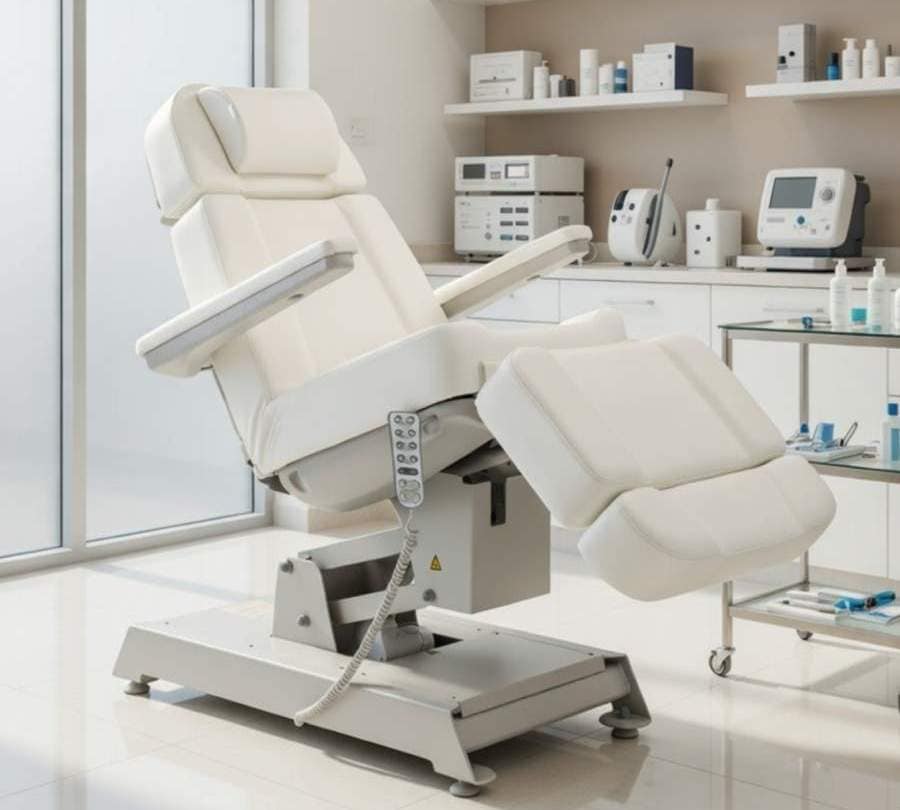
A derma chair price is never just a sticker figure. It reflects the padding, movement, and build a clinic invests in. Weigh that against comfort and durability, and the right seat can provide long-term value for a practice.
Key Takeaways
- A derma chair price reflects the frame, motors, padding, and finish, not just the seat.
- Presets and smooth movement can help reduce set-up time.
- Good upholstery and a comprehensive warranty can help keep maintenance costs manageable.
- A comfortable patient may be easier to position during treatment.
- Buy on performance and suitability rather than price alone.
Some skin and aesthetic treatments keep a patient seated for an hour or more. How still they sit, and how easily the doctor works around them, can depend in part on the chair being used. This is where the derma chair price makes sense: it reflects the quality of the padding, motorised movement, and frame construction.
A fair derma chair price reflects how the chair is designed to perform in a treatment room. Good cushioning and easy positioning help support patient comfort, and comfortable positioning can help patients remain still during delicate procedures. This may reduce the need for repositioning during treatment and support an efficient workflow.
Where the Cost Really Sits
Frame and Motor Quality
Most of what you pay for is inside the chair. A powder-coated steel frame is designed for regular clinical use and resistance to everyday knocks. The motors matter just as much. Lower-quality motors may operate less smoothly over time, while a well-designed drive system is intended to provide quiet and consistent movement.
Upholstery Built to Last
The covering faces regular spills, cleaning, and constant contact throughout the day. Disinfectant-compatible upholstery is designed to withstand repeated cleaning while helping maintain its appearance during regular clinical use. Choosing appropriate upholstery can also help maintain seating comfort over time.
Where Comfort Meets the Bill
Smooth Positioning Every Time
Set the angle once, and get on with the work. That is what smooth positioning can offer a practitioner. Electronic tilt and leg-rest control allow the patient to recline comfortably for longer sessions. Smooth movement helps minimise interruptions during treatment.
Presets Save Time
A programmable memory handset remembers the positions a doctor uses most. One press brings the chair back to a saved setting, reducing the need for repeated manual adjustments. Over a busy schedule, these small efficiencies can help streamline patient setup.
Electric Motors over Manual Cranks
Fine Control at a Touch
With manual cranks or a gas lift, every adjustment means stopping the procedure to reposition the chair. A switch simplifies that process. Backrest, height, and leg-rest adjustments can be made electronically, allowing practitioners to reposition the chair more conveniently during treatment.
Reliability Built for Volume
A quality motor is designed for frequent adjustment cycles while maintaining smooth operation under normal clinical use. Control by foot switch or handset may also reduce the need for repeated contact with adjustment mechanisms, supporting routine cleaning between patients. In high-use environments, reliable operation can contribute to an efficient workflow.
Costs the Price Tag Hides
The Long Game of Ownership
The real cost of a chair extends beyond the purchase price. Buyers focused only on the initial investment may overlook maintenance, servicing, and long-term ownership costs. Looking at the complete picture can help clinics select a derma chair that offers good long-term value.
- Check the warranty, including exactly what it covers.
- Ask how easily genuine spare parts can be obtained.
- Wipe-clean surfaces can simplify routine cleaning between patients.
- A suitable weight capacity should match the intended clinical application.
- Consider the chair’s energy consumption as part of long-term operating costs.
Matching the Chair to the Room
Space and Access Height
Floor space runs out fast in a busy room, so the chair’s footprint is worth measuring before it arrives. A low access height can make getting on and off the chair easier for older patients or those with limited mobility. Choose a size that leaves clinicians enough working space around the chair.
The Look Patients Notice
A clinic that values patient comfort is often judged by the appearance of its treatment rooms. A chair with clean lines and a quality finish can contribute to a professional clinical environment. Colour, texture, and upholstery finish all help shape a patient’s first impression.
Seating Chosen for the Long Run
The best choice balances comfort, adjustability, durability, and value for the clinic’s needs. Choose based on performance, features, and long-term suitability rather than price alone. Compare build quality, movement, warranty support, and after-sales service, then work with a trusted manufacturer to select a chair that matches your clinical requirements.
Disclaimer: Product suitability depends on the intended clinical application, user requirements, and applicable local regulations. Features, specifications, warranty coverage, and available configurations may vary by model.