
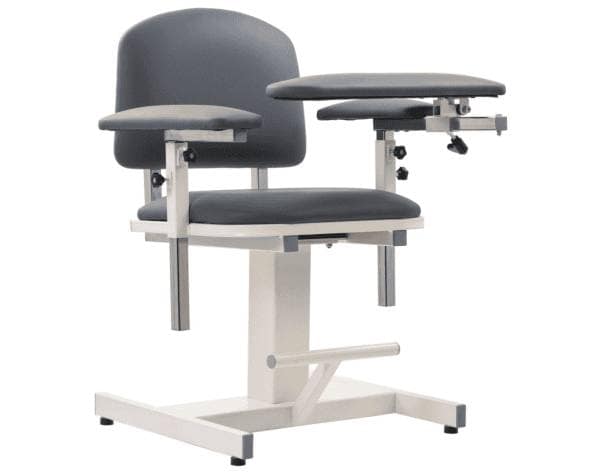
A blood collection chair gives draw stations supportive positioning, electric height adjustment, adjustable armrests and easy-to-clean surfaces. Here is what clinic owners and procurement teams should weigh before choosing one.
Key Takeaways:
- A blood collection chair supports stable, comfortable positioning during blood collection procedures.
- Electric height adjustment sets the working level for each procedure and each member of staff.
- Adjustable armrests hold the patient’s arm in a suitable position for the draw.
- Armrests that move aside can make wheelchair access and patient transfers simpler.
- Wipe-down surfaces keep routine cleaning between patients quick and straightforward.
Every draw begins with a patient taking a seat. What that seat offers decides how smoothly the next few minutes go. Plenty of clinics learned this the slow way, wearing out office chairs that were never meant for clinical work, before finally putting a proper blood collection chair at the station where the real work happens.
The right blood collection chair can make each draw more comfortable and less of a chore for everyone involved. Raise the seat until the arm sits at a suitable working level, settle the armrest under the elbow, and establish a consistent position for the procedure. Set up properly, one station can serve patient after patient without anyone needing to compromise on position.
Why Ordinary Seating Falls Short at the Draw Station
- Procedure Rooms Ask More of Furniture: A waiting area gets by with standard chairs. A draw station asks for more. Staff position patients, adjust the working area and repeat that routine dozens of times a shift. Furniture that resists those movements slows everyone down. Seating built around them keeps the list moving, and the gap shows quickly once daily volumes climb.
- Comfort Shapes the Whole Appointment: Anxious patients grip the armrest, shoulders up around their ears, and a stiff arm can make positioning more difficult. Firm padding, a slight recline and somewhere solid to rest the arm can help create a more comfortable position before the tourniquet appears. Comfort here is not a luxury. It is an important consideration when selecting furniture for a procedure area.
Adjustability That Works for Staff and Patients Alike
- Height Set at the Touch of a Button: Bending over a fixed seat repeatedly during the day can be tiring. Motorised height adjustment takes some of that strain off by bringing the arm up to where the phlebotomist actually works. One press, the seat rises, allowing staff to work at a more suitable height.
- Armrests Built around the Draw: Adjustable armrests hold the arm in a steady position so veins can be accessed comfortably, and different body sizes get accommodated without fuss. Where armrests swing or drop aside, wheelchair users can transfer in and out more easily. A blood collection chair with this flexibility can help accommodate a wider range of patients and transfer requirements.
Cleaning Routines and Long Service Life
- Surfaces That Wipe Down between Patients: Poorly designed upholstery can collect grime in its seams. Better chairs use surfaces that are easier to clean, so a cloth can reach more areas and routine cleaning becomes simpler. Upholstery specified for compatibility with appropriate healthcare cleaning and disinfection products can help withstand regular cleaning, while the frame needs one quick pass with a wet cloth. Turnaround between patients can remain straightforward and hygiene routines easier to manage.
- Care Guidance Worth Reading First: Not every disinfectant agrees with every fabric. Some cleaning products may damage the surface if they are not compatible with the manufacturer’s care instructions, and no warranty may cover damage caused by unsuitable cleaning products. Read the care sheet before the purchase order goes out, and check the stated weight capacity and adjustment range against the model actually being quoted. Specs shift between models more than catalogues admit.
Specification Points That Repay Attention
Some chairs can remain in service for many years. Others may show signs of wear much sooner, and the difference rarely shows in the brochure photos. It shows in the frame, the motors, the stitching. Anyone comparing quotes should hold each model against a short list of essentials before signing anything:
- Electric height adjustment that moves smoothly through the full working range.
- Armrests that adjust for positioning and move aside for transfers.
- A suitable corrosion-resistant finish on the steel frame, particularly where frequent cleaning is required.
- Upholstery with documented performance for relevant fire, abrasion and cleaning/chemical-resistance requirements.
- An access height suitable for elderly patients and those with limited mobility.
- Stated weight capacity and warranty terms, checked against the technical specifications.
Building a Draw Station That Serves for Years
An appropriately specified station can provide practical benefits in day-to-day use. Nobody announces it. The workflow just becomes more consistent, staff have a more comfortable working environment, and the morning list can move more smoothly. Speak with an established medical furniture manufacturer, put two or three specification sheets side by side, and ask to see the chair working before any money changes hands.